Readings: Ezekiel 18:1-4, 25-32 | Philippians 2:1-18 | Matthew 21:23-32
Text: Matthew 21:23-32
Grace, mercy, and peace to you from God, our Father, and our Lord and Savior Jesus Christ.
~ Jesus Comes into the Temple ~
Jesus comes into the temple after entering Jerusalem earlier in Matthew 21 and immediately gets to work that annoys those who are in charge of the temple. He has a diatribe against those who have turned the temple from being a house of prayer into a den of robbers.
Hear what Jesus says:
“Jesus entered the temple and drove off all who sold and bought in the temple, and he overturned the tables of the money changers and the seats of those who sold pigeons. He said to them, ‘It is written, My house shall be called a house of prayer, but you make it a den of robbers.’”
And the blind and the lame came to Him in the temple, and He healed them. But when the chief priests and the scribes saw the wonderful things that He did and the children crying out in the temple, “Hosanna to the Son of David!” they were indignant. And they said to Him, “Do You hear what these are saying?” Jesus said to them, “Yes. Have you never read, ‘Out of the mouth of infants and nursing babies You have prepared praise’?” And leaving them, He went out of the city to Bethany and lodged there.
That happened the day before this. Jesus has this interaction where they’re challenging His authority. But the bigger question isn’t who has authority over what, but what is the temple for?
~ What Is the Temple For? ~
What did God put His name in Jerusalem to do? Was it to have a headquarters where everyone would be like, “Well, that is an impressive building”? Or was it so that God could dwell with His people?
The temple was given by God as a place where a holy God would dwell with a sinful people. And as long and arduous as it may be, looking at, say, the book of Leviticus will show that it is a place where atonement for sin is made, where the evils of the people have to be paid for. There is a cost for sin.
And that was an uncomfortable thing, but the way that the temple had become by the time that Jesus appears there had become a place for dispensing business transactions. It had become a place to mark who was in and who was out by how long their robes were, how pious they appeared.
And it wasn’t a place for hearing the Word of God, of hearing this message that we heard from Ezekiel:
“Why will you die, O house of Israel? For I have no pleasure in the death of anyone,” declares the Lord God. “So turn and live.”
~ God Desires Life ~
So why did so many people die in the Old Testament?
When we were going through the Bible—I can’t remember what Bible study it was—but we were reading through the Old Testament. You see a lot of people receive an immediate judgment. Sodom and Gomorrah, for instance, or the walls of Jericho fall in and everyone except for Rahab’s family is destroyed. Or when Uzzah tries to steady the ark as it’s being brought into Jerusalem, he touches it and he drops dead. A lot of people are dying.
So when God says, “I have no pleasure in the death of the wicked, so turn and live,” His Word here, when the temple has turned into a den of robbers, into a place where this transaction is happening that’s supposed to bring peace to people, He’s greatly distressed because that is not what God gave His temple for. It is a place where real sinners meet the God of Israel, who is giving His Son as the Lamb of God who takes away the sin of the world.
~ The Authority of Jesus ~
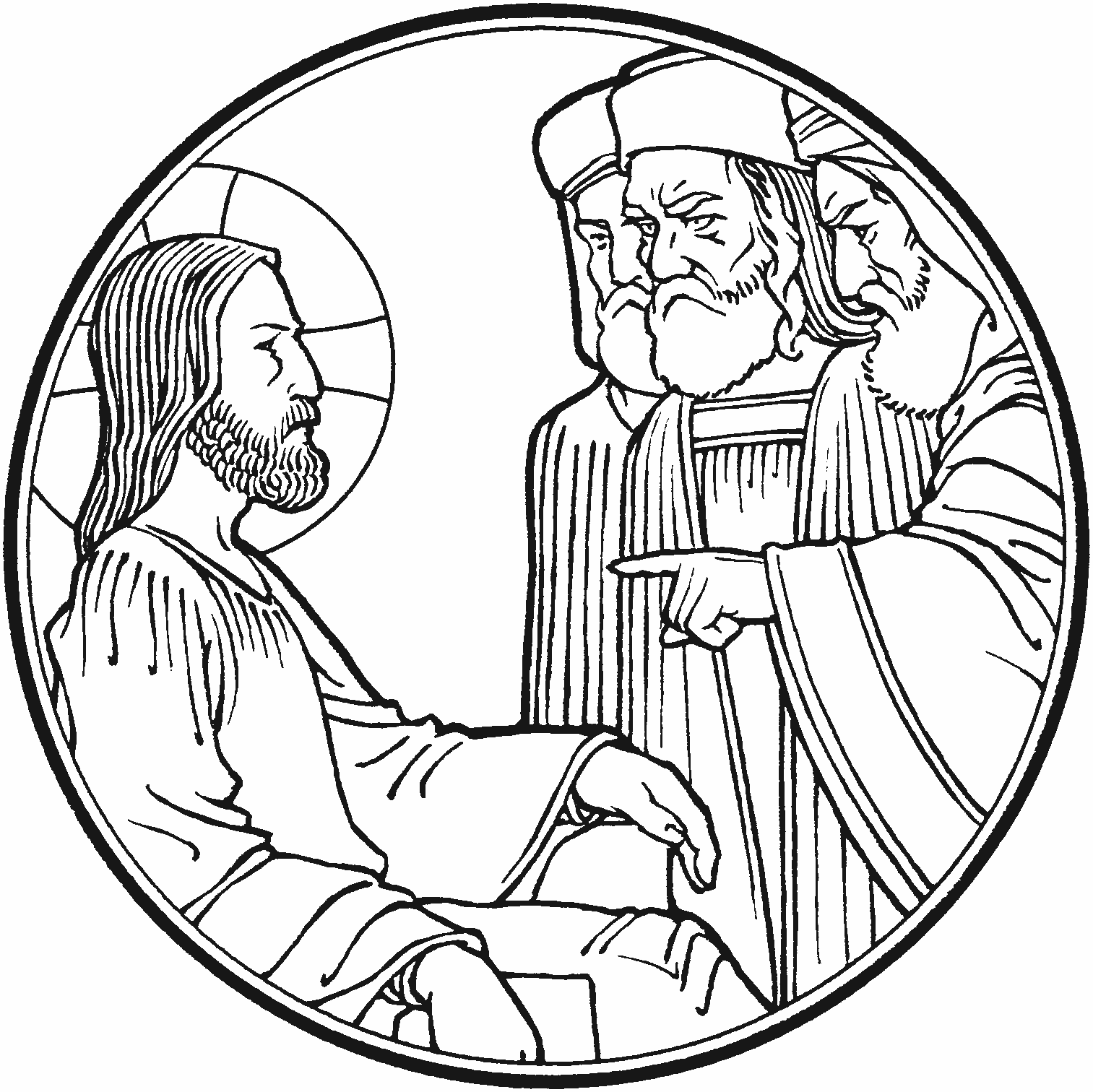
When the scribes and the Pharisees challenge Jesus on this—the chief priests and the elders, to be more accurate here—they’re challenging Him on a question of authority. But in fact, it’s a response to the very Word that God has given them beforehand.
Why did He appear to Moses? Why did He bring the children of Israel out of Egypt? He could have just as easily left them as slaves and in darkness, but He chose to redeem them, to save them out of the prison house of sin and death, of being under Pharaoh’s authority.
So what kind of authority does Jesus bring into the temple here? It’s the authority to restore it back to what God established it for. Not what we would like it to be, not what we think it would be a really good cause, but a place where sinful people meet the God who brings them the only healing that He can give. That’s the only place where He can give them the healing that they need.
~ The Broken Come to Jesus ~
Notice when Jesus comes into the temple and He clears things out, immediately the blind and the lame come to Jesus. The people whose bodies express the brokenness of sin come to Jesus. And that’s a picture of what the gathering of God’s people always has been: those who are broken coming to the Savior.
Many in our day don’t know the brokenness unless it’s pointed out. And so where the Word of God is spoken, there this voice from heaven says, “This is the way that God desires things to be. This is the way that God desires human beings to be and for human beings to treat one another.”
This is something that, unless it is taught, people guess for themselves. They guess about what the good life is, and you could follow the advertisers, you could follow the ideologues, and they would offer you something that would seem to work.
Being practical seems to be the measure of the right way these days. But what God offers in His Word is truth for us, objective truth that doesn’t depend on how we feel about it.
~ God’s Word and Our Need for Rest ~
It is the Word from our Creator, who made us to not have any other gods, who made us to pray, to worship, to call on Him. When we see disasters happening in the world, when we see the weight of our own sin, we call on Him in that day of trouble, because He will answer us. He will deliver us.
We also need to be taught that we need rest, that we need the Sabbath that God has given for us to enjoy—a rest from our labors that are so chock-full of mistakes and holes, that we rest in God’s labor.
And again, this is what the temple was for.
~ The Parable of the Two Sons ~
And so Jesus follows up His teaching with something that wasn’t printed in the bulletin, probably because it wouldn’t fit very well, but it’s also one of the optional add-ons to it. And that’s this parable of the two sons. Jesus uses this to illustrate what it looks like in a proper, a fitting response to the Word of God, where He says:
  “What do you think? A man had two sons. He went to the first and said, ‘Son, go and work in the vineyard today.’ And the answer, ‘I will not,’ but afterward he changed his mind and went.
  “And he went to the other son and said the same, and he answered, ‘I go, sir,’ but he did not.
  “Which of the two did the will of his father?”
  They—that is, the chief priests and the elders—said, “The first.”
  Jesus said to them:
  “Truly, I say to you, the tax collectors and the prostitutes go into the kingdom of God before you, where John came to you in the way of righteousness, and you did not believe him, but the tax collectors and the prostitutes believed him. And even when you saw it, you did not afterward change your minds and believe him.”
~ The Relevance of God’s Word ~
A question that often plagues the church in our day is the question of being relevant: How can these words from 3,500 years to 2,000 years ago apply to modern people today?
Well, there’s a little bit of a misunderstanding about modern people. We’re the same human beings that have always been on earth, and our Creator knows what we need to hear. He won’t be flattered by lip service, as He showed in this parable, but in those who hear the words, who leave the emptiness of their own propping themselves up—whether they’re propping themselves up as the chief priests and the elders were by setting up this worship system that all depended on their own efforts, or any other number of causes. But the ones who are received by God are the ones that hear this Word and listen to it.
Blessed are those who hear the Word of God and keep it, who treasure it, not as, “Oh, that’s your opinion, that’s my opinion,” but as, “This is God’s opinion.” This is the distinction between those who came into the kingdom and those who refused.
~ The Needy Come to the Cross ~
Those who are in the kingdom are the needy. They are the ones who see that we haven’t lived the life that God has desired for us. We repent, and we are brought to the truest altar, the altar of the cross.
But it didn’t stay in Jerusalem, and this is the good part for us: we don’t have to go to a temple in Jerusalem to find Jesus. He comes to us. He comes everywhere that this good news is preached. He comes in the absolution. He comes in the waters of Holy Baptism to you and to your children.
And He comes this day to you with all the ways that you and I have failed in the Law. We fail to keep the laws we ought to. We have made a mess of things by our own failures, but we come to Jesus for rest.
~ Jesus Gives Us Rest ~
He comes to us and gives us rest, and He says, “Take, eat. This is My body, which is given for you. Take, drink. This is My blood, which is shed for you, for the forgiveness of sins.”
This is the place that God has ordained to bring us healing, because He doesn’t desire our death. He desires us to be healed from our sins, renewed, restored after the image of our Creator.
And that’s what He does. He gives us His Holy Spirit so that we are the beginning of His new creation. He renews our minds to see what is good and beautiful and perfect, and to see that even in the struggle with our old sinful flesh, He still, throughout our lives, brings us that healing that no doctor’s office could.
But it’s a healing that only comes through His Gospel.
~ Conclusion ~
And so even today, we thank God that He does come to us, broken and sinful and sick as we are, and we hear His voice and believe Him in the name of Jesus.
Now, the peace of God, which passes all understanding, keep your hearts and minds in Christ Jesus.
Amen.
Leave a Reply