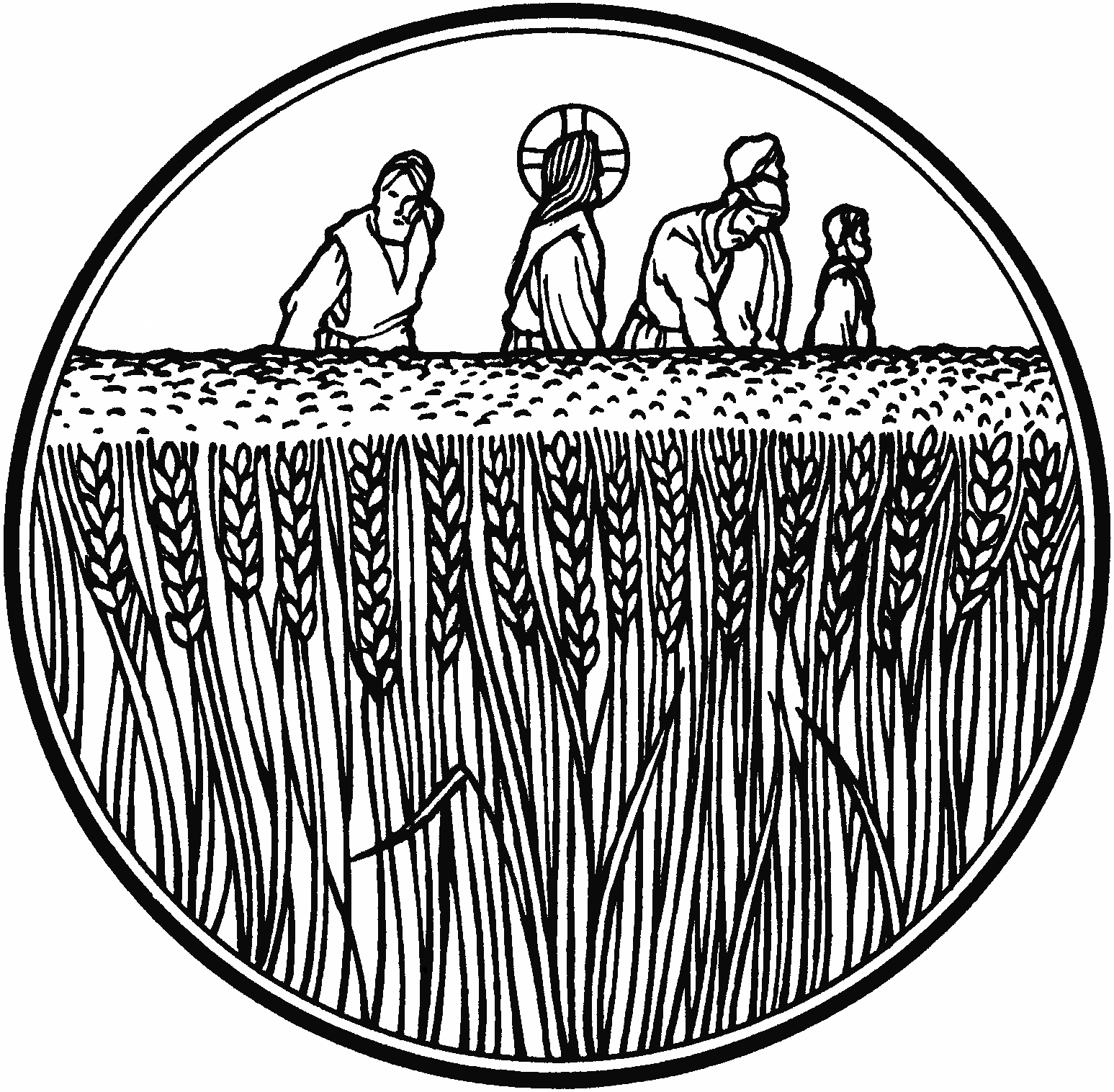
Text: Luke 10:1-9
“After this,” St. Luke writes. After what? After a section titled “The Cost of Following Jesus,” which closes out chapter 9:
57As they were going along the road, someone said to him, “I will follow you wherever you go.” 58And Jesus said to him, “Foxes have holes, and birds of the air have nests, but the Son of Man has nowhere to lay his head.” 59To another he said, “Follow me.” But he said, “Lord, let me first go and bury my father.” 60And Jesus said to him, “Leave the dead to bury their own dead. But as for you, go and proclaim the kingdom of God.” 61Yet another said, “I will follow you, Lord, but let me first say farewell to those at my home.” 62Jesus said to him, “No one who puts his hand to the plow and looks back is fit for the kingdom of God.”
One seems to be willing—unless it means he will lose his home. Another is called, but not if it means losing his family. A third pledges his faithfulness, but hopes to keep one foot in his old life. It would be entrapment if the Lord didn’t disclose what it will cost to follow Him. Any wistful dreams that we can go on business as usual and have a trouble-free life are shattered. We are called Christians because we belong to Christ, who set His face toward Jerusalem. There, He was rejected, mocked, and spit upon all while He was saving our fallen race.
In His life of perfect obedience, perfect self-sacrifice, perfect suffering, He opened the barred gates of Eden. But Christ’s life is also a template for those who are adopted by God as children through Him. It is a life of eternal peace with God, but often not in the outward sense we think of.
1After this the Lord appointed seventy-two others and sent them on ahead of him, two by two, into every town and place where he himself was about to go. 2And he said to them, “The harvest is plentiful, but the laborers are few. Therefore pray earnestly to the Lord of the harvest to send out laborers into his harvest. 3Go your way; behold, I am sending you out as lambs in the midst of wolves. 4Carry no moneybag, no knapsack, no sandals, and greet no one on the road. 5Whatever house you enter, first say, ‘Peace be to this house!’ 6And if a son of peace is there, your peace will rest upon him. But if not, it will return to you. 7And remain in the same house, eating and drinking what they provide, for the laborer deserves his wages. Do not go from house to house. 8Whenever you enter a town and they receive you, eat what is set before you. 9Heal the sick in it and say to them, ‘The kingdom of God has come near to you.’
These others, like little Christs, would be conformed to the template of Christ. He sent them on ahead of Him to do the same thing as Him: Labor in the Lord’s harvest, be His lambs in the midst of wolves, entrust their life to Him, and bear His peace to those they met.
These seventy-two are first and foremost an example for pastors, who are publicly sent to preach and teach, administer the mysteries of Christ, and to embody the Lord Jesus in their lives and in their role among His congregation. Not everyone sees pastors in this light. Some view them as CEO’s of a charity organization who lead with vision and motivate, much like a new director was chosen to lead Lutheran Heritage Foundation. Others see them as on-staff marriage and family therapists who bring the skills of mental health to better the lives of those who belong. Still others envision the pastor as a community organizer who can rally their group to various political actions. And if that is how a pastor is viewed, the distinction between men and women pastors is irrelevant. Many successful charities, counselors, and community activists are women.
But Jesus has something different in mind for His pastors. He sends out His laborers with the express direction to proclaim His Word. They are to embody the Lord Jesus Christ to the congregation. If they rightly handle that Word, they will either be received or rejected based on their hearer’s reception of that Word. It’s a Word that has all authority in heaven and on earth (Matt. 28:19), a Word that frees people from the deadly jaws of Satan and hell itself, a Word that binds up the broken and contrite spirit and breathes in new life. These men, both pastors and the seventy-two are ambassadors for the Kingdom of God (2 Corinthians 5:18-20).
Yet, lest we think that our Lord is only concerned with the leaders of His flock, let’s take a look at each of those activities for which Christ sent out the 72.
We pray—no, beg[1]—the Lord to send out laborers into His harvest. It is always His harvest, never one’s own labor. We default to think that the Church is the sum of its parts. After all, it’s true for every other human institution. You get in what you put in. Therefore, the Church must depend on having the right quantity of pastors, volunteers, friendly people, donors, sturdy buildings, and so on. But the Lord doesn’t let us be deluded into thinking the harvest is ours. He bids us ask Him to grant success to the harvest, even if in our calculations, things look scarcely possible. All that the Church possesses belongs to the Lord. So it is with the increase or decrease in a particular time or place. His Word always accomplishes His purpose—no matter the locale and no matter the century.
He sent these disciples out without any promise of personal glory. In fact, it was nothing of the sort: “Go your way; behold, I am sending you out as lambs in the midst of wolves.” This is something we could all stand to be reminded of. The world is uncomfortable and painful in many ways because of the evils that happen to us and our own foolishness. But the world is also enemy territory. Little Christs as we are, we need to take to heart how Jesus was received. The demons writhed against His reclaiming of men from the devil’s kingdom (Luke 4:33-36, 8:26-35; 9:37-43a), and those who refused to believe also irrationally sought Jesus’ destruction (Luke 4:16-30; 19:45-48).
The warfare may not be intense all the time and in every part of the world, but we should always expect it. It may be that the wolves have had a meal lately (so to speak) and it keeps them at bay. But also know that you could be their next meal.
Luther wrote in the preface to his Large Catechism,
“Nothing is so effectual against the devil, the world, the flesh, and all evil thoughts as to occupy oneself with the Word of God, talk about it, and meditate on it. Psalm 1 calls those blessed who ‘meditate on God’s law day and night.’ You will never offer up any incense or other savor more potent against the devil than to occupy yourself with God’s commandments and words and to speak, sing, and meditate on them. This, indeed, is the true holy water, the sign which routs the devil and puts him to flight.” (LC, Preface, 10 [Tappert edition])
The next instruction the Lord gives the seventy-two is, “Carry no moneybag, no knapsack, no sandals, and greet no one on the road.” Just as Jesus faced the devil in the wilderness, we daily need the lesson of how God provided for His ancient people for 40 years in the desert. That Scripture Jesus used against the devil, “Man shall not live by bread alone” comes from a larger lesson God gives through Moses in Deuteronomy 8:
“2And you shall remember the whole way that the Lord your God has led you these forty years in the wilderness, that he might humble you, testing you to know what was in your heart, whether you would keep his commandments or not. 3And he humbled you and let you hunger and fed you with manna, which you did not know…that he might make you know that man does not live by bread alone, but man lives by every word that comes from the mouth of the Lord. 4Your clothing did not wear out on you and your foot did not swell these forty years. 5Know then in your heart that, as a man disciplines his son, the Lord your God disciplines you.”
There are times when it’s easy to believe God provides all we need…because we can see and touch it. Then, there are times when each day seems like a miracle how it all comes together. But unlike those around us who don’t know God [Matt. 6:31-32], we have learned from Him that He can and will provide, no matter how dire the circumstance. Desolate wasteland and thousands of people? He’s got that. Providing for a family, kids in college, and the furnace goes out? He’s got that too. Bills coming due before the paycheck, and then a medical emergency? He does not lie when He says, “I will never leave you nor forsake you.” (Hebrews 13:5-6)
Moses zeroes in on it when he says that God put them in the wilderness in order to humble them and test what was in their heart. When our material life—especially our money or our health—goes out the window, these are moments when God is treating us as children, teaching us to rely on Him for every need. No, it doesn’t mean we should overspend and waste His gifts, because that would be putting the Lord to the test. But it does mean that we go out like the Seventy-Two, with the promise that God will provide it when we get there. He will certainly give us today our daily bread, and we ought to thank and praise Him for it because we actually recognize this and know Him.
Last, He tells His disciples, “Whatever house you enter, first say, ‘Peace be to this house!’ 6 And if a son of peace is there, your peace will rest upon him. But if not, it will return to you.”
It’s the job of the pastor to publicly proclaim His peace, as the Seventy-Two did and I’m doing now. But His peace rests upon every believer, and it is shared in our lives, through the vocations we have toward one another. The “sons of peace” are those recipients of God’s kingdom.
But what exactly is this peace? It’s the announcement of the angels to shepherds: “Glory to God in the highest, and on earth peace among those with whom he is pleased!” (Luke 2:14) It’s the result of knowing God through Jesus Christ: that though we rightly deserve His wrath for all that the human race has done and what we ourselves are guilty of, He made the once-for-all atonement. That being reconciled with our Creator, we also have the sure hope of following where Jesus has gone in eternal life on the other side of the grave.
Like we heard St. Paul say last week in the Epistle, “The peace of God, which surpasses all understanding, will guard your hearts and your minds in Christ Jesus.” (Phil. 4:7) The sons of peace have this gift, guarding their hearts and minds even as the world reels and rages. As political ideologies clash and maniacs unleash violence against helpless children and teachers, we are heirs of an unshakeable, eternal Kingdom. In every day, we have hope in the God who rules over all the earth.
Today, Garret Adams will publicly profess his faith, gathered among the faithful who rejoice with him and support him with our prayers. Yet, more important than Garret himself is the Kingdom that he has gladly received and pledges his loyalty to this day. His King will continue to fight for him, no matter where his earthly journey leads. This latest part of his journey of faith has served to strengthen him and helped him to better understand his Lord’s Word. This is the very thing for which the Seventy-Two were sent out to do: to advance the Kingdom of God and declare this heavenly peace in which we rest.
Truly, the Kingdom of God has come near to all of you, here as we share in those gifts unique to the Church, but also as each of us go out into the world. He sends us out, and is always with us on the way. Thanks be to God!
In the Name + of Jesus. Amen.
[1] Δέομαι – ask, request, beg
Leave a Reply