Readings: Genesis 1:1-2:4a | Acts 2:14a, 22-36 | Matthew 28:16-20
Text: Matthew 28:16-20
In the Name + of Jesus. Amen.
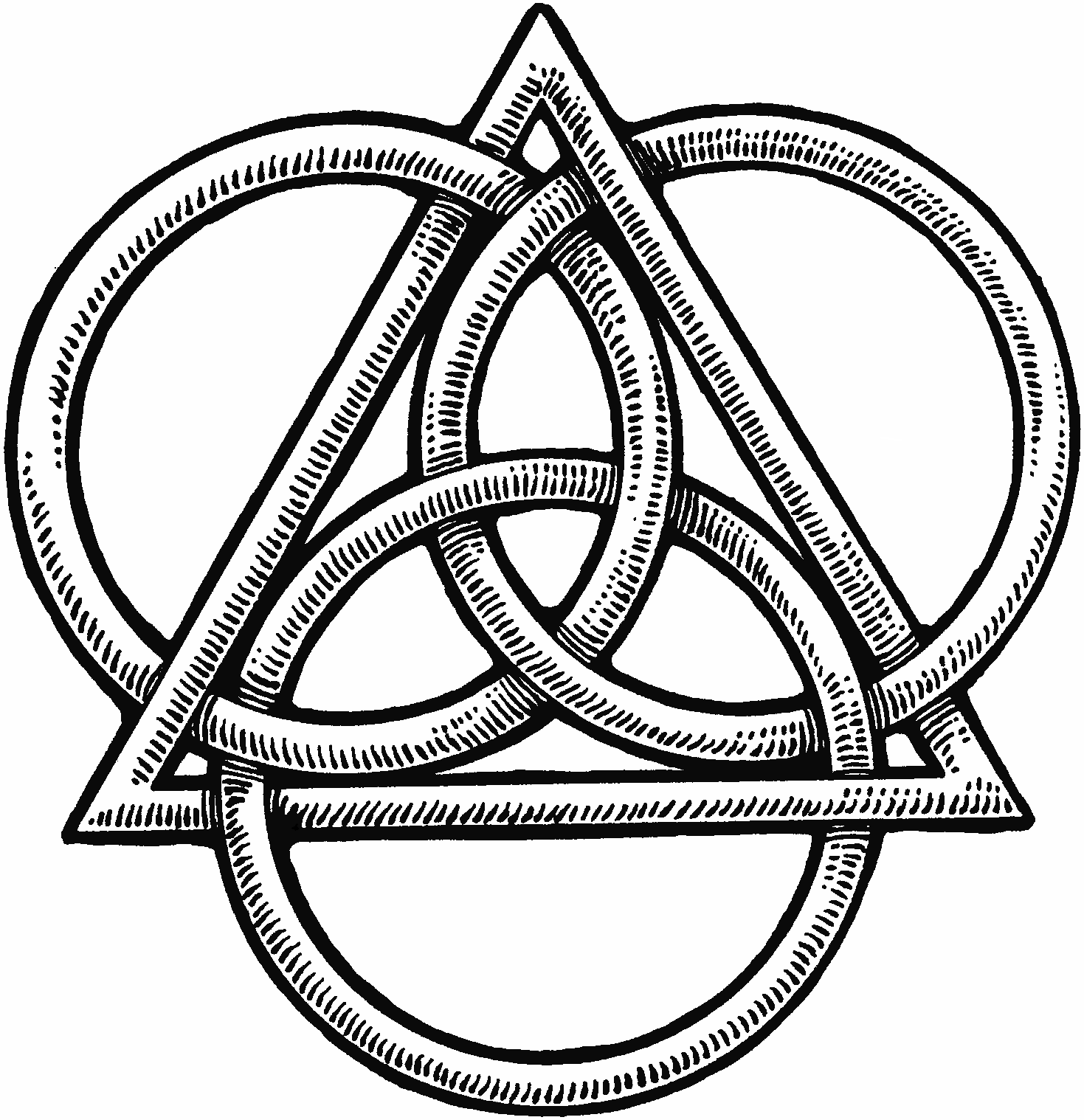
It is impossible to fully comprehend the mystery of the Trinity. It isn’t a math problem to be solved—three in one and one in three, or a puzzle to be unlocked. It’s an article of faith—something we believe because that’s what God tells us in His Word.
In the first several centuries of the Church, many false and therefore dangerous confusions arose about one God in three Persons—Father, Son, and Holy Spirit. There was the Patripassian (lit: Father-sufferer) controversy associated with a priest named Sabellius in the 200’s. Sabellius confused the suffering of the Son with that of the Father. Then, there were the Arians who said the Son was a creature and not true God from eternity. This is why the Nicene Creed drives the point home about God of God, Light of Light, and so on. Eutychus [you-te-KEYS] who said Jesus Christ wasn’t simultaneously God and Man but some blend. But not to be outdone, Nestorius went the opposite way and said you couldn’t say that God was born and died, but only “Christ” did those things. And not to be left out, the another group after the council of Nicea contended that the Holy Spirit was of lesser rank, perhaps an angel or an impersonal energy.[1]
Confusions like these were the occasion for the Athanasian Creed, named after the 4th century champion for the Trinity, Athanasius. While these debates rage among theologians and philosophers, if you’re not skilled in that, you might wonder why it all matters to the common Christian?
God is Almighty and unknowable. His judgments are beyond our ability to fathom. Solomon confesses, “Behold, heaven and the highest heaven cannot contain you; how much less this house that I have built!” (1 Kings 8:27) So, how can we lowly people claim to know God, understand His will, or be sure that we are worshipping Him in a fitting manner? If this point gets pushed too far, we could find ourselves in serious, existential doubt about our faith!
But for us to say we know God is not false confidence or naive bravado. God reveals Himself to us. The Holy, transcendent, Triune God wants to be known by His creatures, who are made in His image. So, He reveals Himself to us in weakness—in words, in water, in the flesh, in bread and wine.
In the age of information, our lives are filled with words. Sometimes we become overwhelmed with the volume or a perceived irrelevance of what people are saying. But has always used words to relate to His creatures—“by the word of the Lord the heavens were made,” (Ps. 33:6) the first words He spoke to Adam in the garden, “Your Word is a lamp to my feet and light to my path” (Ps. 119:105), “As the rain and snow come down form heaven…making it bring forth and sprout…so shall my word be that goes out from my mouth; it shall not return to me empty” (Isa. 55:10), “the Word became flesh and dwelt among us and we have seen His glory” (John 1:14). Human words only carry so much power—the power other people give them. But God’s Word, received those who have ears to hear, accomplishes faith, forgives sins, heals broken spirits, casts out demons, and on the last day will even raise the dead (John 5:28-29).
God also attaches His Word to otherwise ordinary, humble things.
18And Jesus came and said to them, “All authority in heaven and on earth has been given to me. 19Go therefore and make disciples of all nations, baptizing them in the name of the Father and of the Son and of the Holy Spirit, 20teaching them to observe all that I have commanded you. And behold, I am with you always, to the end of the age.”
The teaching of His disciples, the word of forgiveness they speak are not their own, but God’s. The water of Baptism goes through the same treatment plant and pipes as the water with which you drink and take a shower, but when it is combined with God’s Word—according to His command here—it is a life-giving water, rich in grace and a washing of new birth in the Holy Spirit (Titus 3:5-8, Small Catechism). In the same way, there are countless types of bread, some quite exotic and delicious. There are many kinds of wine with flavors so subtle only connoisseurs can appreciate them. But only the bread and wine set apart by the Lord’s Word, according to His institution, has the promise,
“This is my Body given for you; This is my blood shed for you for the forgiveness of your sins.”
At the same time, these gifts, which we call Sacraments, are not meant to take on a life of their own. We do not baptize because we believe it to be a magic formula that makes us bulletproof from harm, or free to live a godless life. We do not confess our sins to the pastor so that we can get a clean slate to go out and sin some more. And the Lord’s Supper is not a ritual to give us religious feelings. Neither are the elements themselves the focus, but Christ Himself and the forgiveness of our sins.
While the Athanasian Creed makes it very clear how careful you have to be with the doctrine of the Trinity, what this actually looks like is when people despise the way God comes into our life, and neglect those very plain ways the Infinite God wants to dwell with us finite creatures.
In the blindness of sin, we neglect these simple means, often by making other things more of a priority. When we think we’re wise and spiritual, we only sense God’s presence when we have an emotionally-moving experience. The music has to be just so, the congregation has to show signs of having the Holy Spirit, and the pastor has to be dynamic and relevant. But Almighty God does not promise, “Behold, I am with you always to the end of the age, except when you’re bored by worship and think you’ll lose your kids if there isn’t an fancy, well-funded youth program.”
No, He says He is with us always in very concrete ways that are so simple a child can understand and accept them. Therefore Jesus says,
“14Let the children come to me; do not hinder them, for to such belongs the kingdom of God. 15Truly, I say to you, whoever does not receive the kingdom of God like a child shall not enter it.”
With simple trust in what our Heavenly Father has said, we find in these simple means, the fulness of deity is pleased to dwell. That is what Christ our Lord commands before ascending into heaven: That believing this, we follow His instructions and don’t think ourselves wiser than Him—make disciples of all nations by baptizing them in the Name of the Triune God, and teaching them His Word continually. It is in these that He promises to be with us always to the Day of His return.
In them—the Words, the water, the absolution, the bread and wine—God lays out His heart for you. In them, you find His power to release you from sin and hell and open eternal life. With these, He adopts you and your children as sons of God, and gives the perseverance you need for every trial, temptation, disappointment, and sorrow of this world.
In the Name of the Father and of the + Son and of the Holy Spirit. Amen.
[1] For more information, see Leo Donald Davis, “The First Seven Ecumenical Councils (325-787)”
Leave a Reply