Readings: Revelation 7:2-17 | 1 John 3:1-3 | Matthew 5:1-12
Text: Psalm 31:1-5
Early in the history of the Church, it was common for Christians to write the confession of their faith in blood. The stories of the faithful who had resisted the pressure to deny Christ in the face of civil punishments, those who renounced their wealth for the eternal benefit of their neighbor, and whom the Lord had apportioned great works like the evangelists, apostles, and defenders of the faith. They were hated by kings and pagans. So, the Church, regularly under attack by imperial edicts, began to gather and remember the brothers and sisters who had gone before them. This is the origin of commemorations like Irenaeus of Lyon, Felicity and Perpetua, and John Chrysostom.
The tradition started later in the 4th century in Greek churches of commemorating all the saints who had gone before, on May 13. This date carried over to the Latin Christians, when May 13, 609 was celebrated as a Feast to the Blessed Virgin Mary and All Christian Martyrs.
Two generations later in the 730’s, Pope Gregory marked November 1 as a remembrance of “all the apostles, martyrs, confessors, and all the just who rest in peace throughout the world.” (cited by Bede the Venerable) Eventually this practice was standardized throughout the Holy Roman Empire, and since we are Western Christians, this is the practice we’ve inherited.
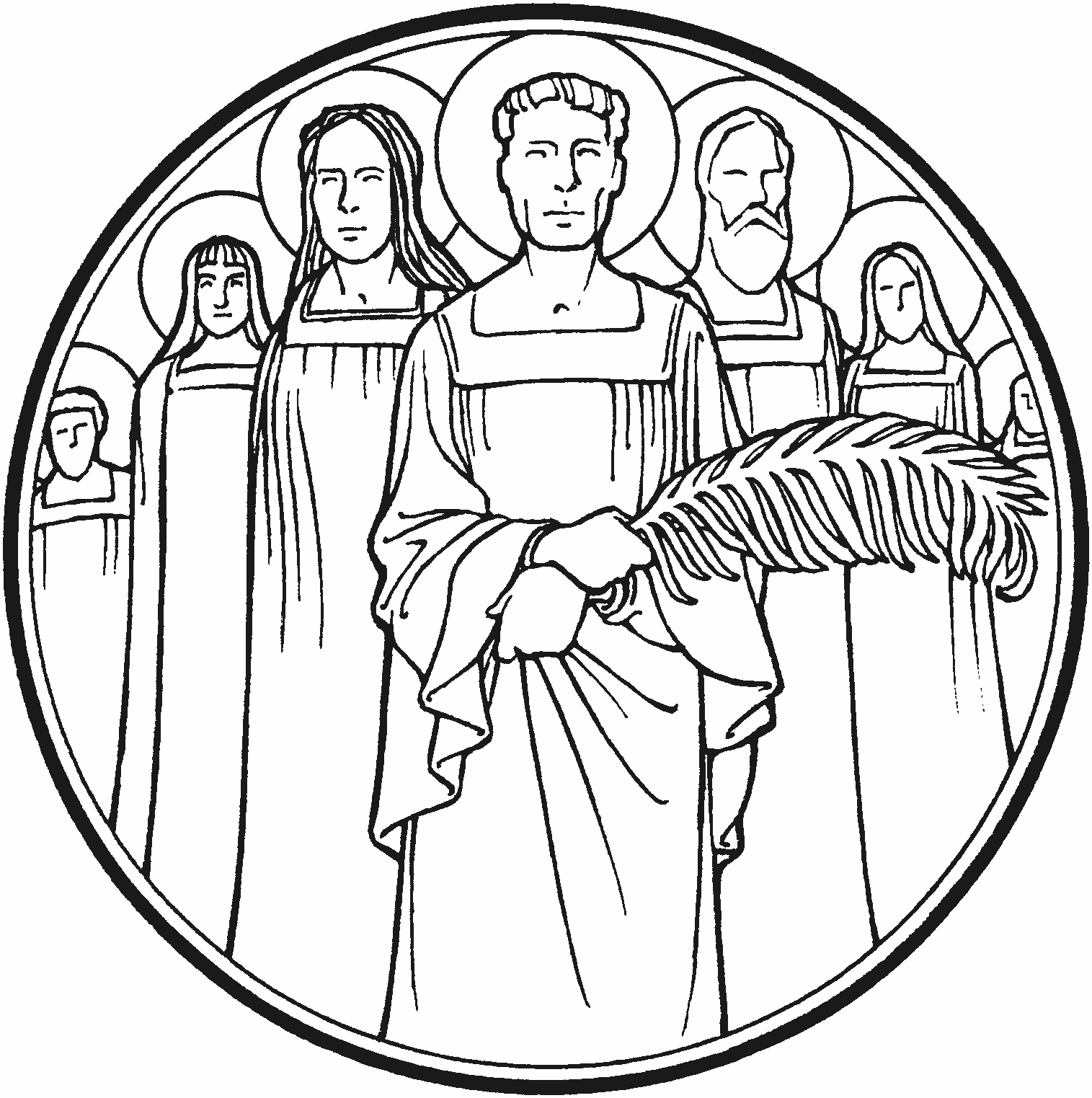
All Saints is a time for remembering the witness of the brothers and sisters in Christ who have gone before us. The Lord has ordered His Body in such a way that none of us lives or dies to himself alone [Romans 14:7-8]. The Holy Spirit knits us together into one Body in Christ (Ephesians 4:4-6, 1 Corinthians 12:18-20). Whether the Lord apportions a great work for the sake of the whole church, or our life was a witness to our own grandchildren, neighbor kids, or spouse—we are His workmanship, and we rely on the encouragement of the example of our fellow saints.
This is the benefit of remembering that “great cloud of witnesses with which we are surrounded” (Hebrews 12:1-2). Our fathers in the Reformation wrote helpfully about how to rightly honor the saints:
4Our Confession approves honoring the saints in three ways. The first is thanksgiving. We should thank God because He has shown examples of mercy, because He wishes to save people, and because He has given teachers and other gifts to the Church. These gifts, since they are the greatest, should be amplified. The saints themselves, who have faithfully used these gifts, should be praised just as Christ praises faithful businessmen (Matthew 25:21, 23). 5The second service is the strengthening of our faith. When we see Peter’s denial forgiven, we also are encouraged to believe all the more that grace truly superabounds over sin (Romans 5:20). 6The third honor is the imitation, first of faith, then of the other virtues. Everyone should imitate the saints according to his calling. (Apology to the Augsburg Confession, Article 21, para. 4-6)
So, with this in mind, let’s turn to the Psalm chosen for today, the first part of Psalm 31:
1  In you, O LORD, do I take refuge;
     let me never be put to shame;
     in your righteousness deliver me!
2  Incline your ear to me;
     rescue me speedily!
   Be a rock of refuge for me,
     a strong fortress to save me!
3  For you are my rock and my fortress;
     and for your name’s sake you lead me and guide me;
4  you take me out of the net they have hidden for me,
     for you are my refuge.
5  Into your hand I commit my spirit;
     you have redeemed me, O LORD, faithful God.
The reality of living as a faithful follower of Christ in these days is that we will feel alienation, grief, rejection, and hostility. It’s true that we do enjoy the earthly blessings of God’s provision, good family, a stable life, and so forth. However, they also pass away.
“21The Lord gave, and the Lord has taken away; blessed be the name of the Lord.” (Job 1:21)
If we pay attention to God’s Word, we will see how far the world around us, and our own sinful hearts resist His truth. Increasingly, we hear of hostility toward the brothers and sisters because they stand on the truth in terms of God’s creation of man and woman, of not sharing in the wicked glorification of death and witchcraft that come with this time of year, or not putting our hope in princes for a broken imitation of salvation.
In this life, we are often put to shame, finding that our hopes in the people or institutions were dashed by some failing. We are put to shame by those who excel in the world’s shrewdness and could care less for what God thinks. That shame is real, and it hurts.
But we know that there is a greater shame—an eternal one—that God in His mercy has saved us from. There is much more that we should rightly be ashamed of before the Righteous Judge, who knows all and searches the hearts of all. If we were left to this, we too would have no refuge. But the Holy Spirit has lifted up our eyes to see our Savior crucified, bleeding and dying in our place, bearing the dreadful wrath of God, and we hear Him cry what we most feared:
“1My God, my God, why have you forsaken me?” (Ps. 22:1)
We also need the comfort that what we now see is not what will be. In the Epistle reading, St. John gave us words for our faith to feed on:
“2Beloved, we are God’s children now, and what we will be has not yet appeared; but we know that when he appears we shall be like him, because we shall see him as he is.”
(1 John 3:2)
And because God has called us His children, even now, we cry out—not to an empty sky or an imaginary deity—but to our Heavenly Father:
“2Incline your ear to me; rescue me speedily! Be a rock of refuge for me, a strong fortress to save me! 3For you are my rock and my fortress; and for your name’s sake you lead me and guide me; 4you take me out of the net they have hidden for me, for you are my refuge.” (Psalm 31:2–4)
He who has adopted us and paid our ransom at such high cost will not leave us for dead along the way. In every need, He is there. If we are lacking in the needs of this life, instead of despairing, we confess:
What is meant by daily bread? Daily bread includes everything that has to do with the support and needs of the body, such as food, drink, clothing, shoes, house, home, land, animals, money, goods, a devout husband or wife, devout children, devout workers, devout and faithful rulers, good government, good weather, peace, health, self-control, good reputation, good friends, faithful neighbors, and the like. (Small Catechism, Lord’s Prayer, 4th Petition)
If we are afraid that our faith is weak and that we have angered God by the way we live, He assures us with His saving mercy:
“4when the goodness and loving kindness of God our Savior appeared, 5he saved us, not because of works done by us in righteousness, but according to his own mercy, by the washing of regeneration and renewal of the Holy Spirit, 6whom he poured out on us richly through Jesus Christ our Savior, 7so that being justified by his grace we might become heirs according to the hope of eternal life.”
(Titus 3:4-7)
Together with this, we also rest on the promise that the forgiving words spoken by the Pastor are not just his opinion. Rather, it is the Lord Himself who said:
“23If you forgive the sins of any, they are forgiven them.”
(John 20:23)
And if it’s passing through death that we fear, our Lord Himself has already passed through it. Psalm 31 has become our confident prayer because our Lord and Savior has modeled for us how to die:
“44It was now about the sixth hour, and there was darkness over the whole land until the ninth hour, 45while the sun’s light failed. And the curtain of the temple was torn in two. 46Then Jesus, calling out with a loud voice, said, ‘Father, into your hands I commit my spirit!’ And having said this he breathed his last.” (Luke 23:44-46)
You have been baptized into His death, where you were adopted as a beloved child of God. We will also follow our Lord in His resurrection and for all eternity, we will never be put to shame.
In the Name of the Father and of the + Son and of the Holy Spirit. Amen.
Leave a Reply