Readings: Isaiah 11:1-10 | Romans 15:4-13 | Matthew 3:1-12
Text: Matthew 3:1-12
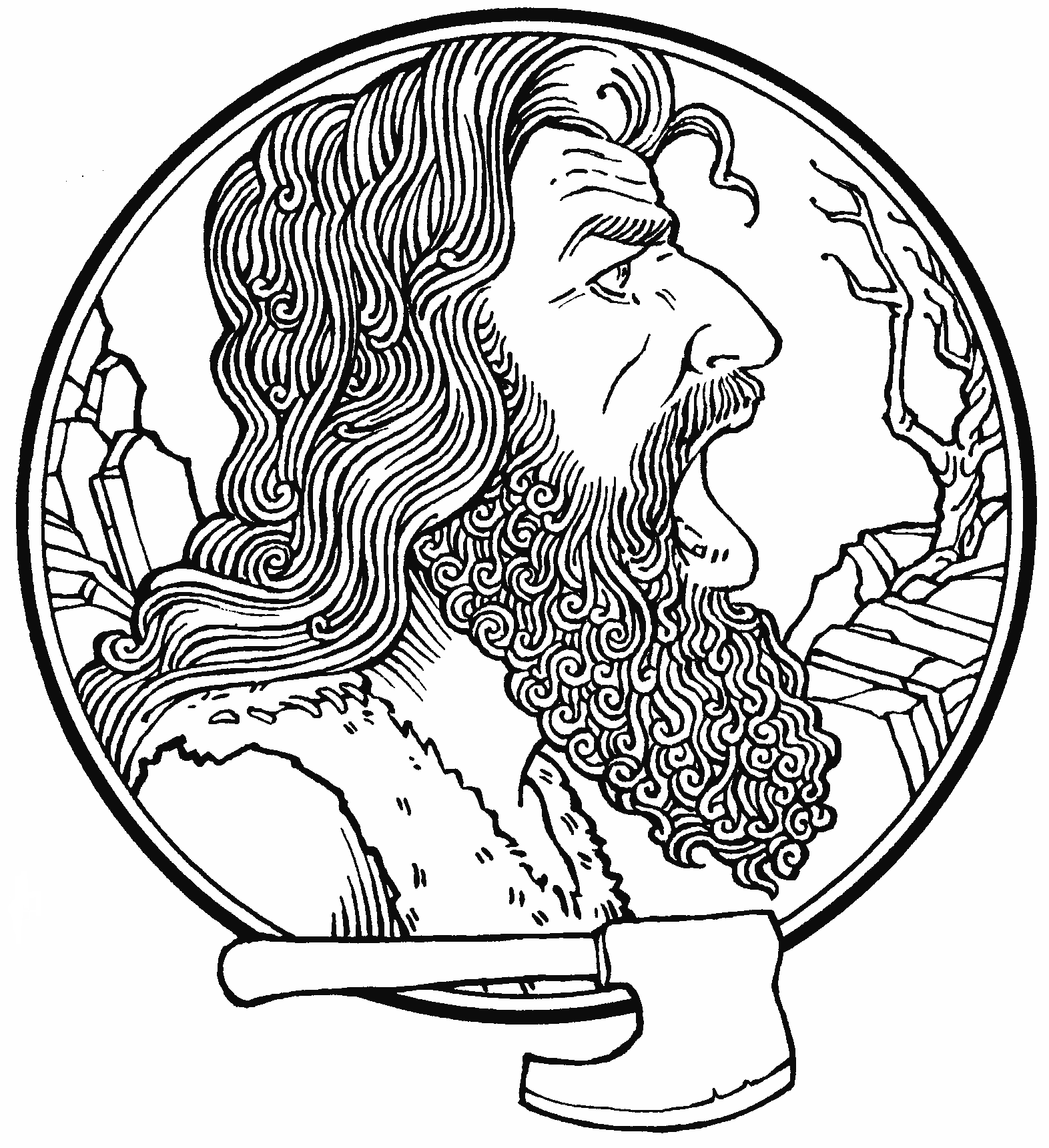
Saint John the Baptizer’s appearance is jarring. There’s no getting comfortable around a man who wears camel fur and eats nothing but bugs and honey. But why?
John is uncomfortable because of what his appearance brings up combined with what he preaches. He eats locusts, and yet he preaches a plague far greater than the one which devoured Egyptian crops.[1] It is a plague which even the sons of Abraham may suffer. This is unthinkable that those who labor hard for the chosen people of God—the Pharisees and Sadducees—would be cut down and thrown into the fire. How could God be so callous and not recognize their many contributions? Doesn’t he see how many hours they’ve labored, they’ve studied, they’ve prayed, how many golden things they have dedicated to Him. All of it may be gone like the empire of hard-hearted, idolatrous Pharaoh, if they only fear the wrath to come and have no godly remorse (contrition for their sins) and a plea to God’s mercy which endures forever (Ps. 107:1). God will not show favorites, but will honor and bless the faith which He has created.
John eats wild honey like the judge Samson who found it in the carcass of a lion he slayed with his bare hands.[2] Samson was able to slay the Philistines for solving his riddle, but it is with John’s bare words that he slays his hearers—not just the uncircumcised, but all who are uncircumcised in their heart—that is they do not rightly fear God. John announces the coming of the One who “will open [His] mouth in a parable; [who] will utter dark sayings from of old.” (Ps. 78:2) The One mightier than Samson, whose words will bring about “the fall and rising of many in Israel” (Luke 2:34) is the One whom John announces.
John also wears a leather belt, reminiscent of the garments of skin with which God clothed our first parents after they sinned (Genesis 3:20-21). At that point, they were unable to be conscientious and adopt a vegan outlook because the leather belt taught them that peace with God came at the cost of another’s life. Too often have we, their children, put God to the test, doing what is wicked and then when the lightning bolt didn’t come or we didn’t get swallowed by the earth, we presumed on His kindness and assumed His inaction we could get away with it. St. Paul rightly says, “Do you presume on the riches of his kindness and forbearance and patience, not knowing that God’s kindness is meant to lead you to repentance?” (Romans 2:4) That leather belt, like the garments for Adam and Eve, along with the tens of thousands of animals slaughtered on Israel’s altars, and ultimately God’s son sacrificed on the cross, ought to teach us to rightly appreciate what it cost to have “on earth peace among those with whom he is pleased!” (Luke 2:14)
And finally, John wears a hairy cloak, to remind us of Jacob. Jacob gained the blessing from his father, Isaac, by works not his own. He got the blessing which rightly belonged to his brother, who was the beloved of his father.[3] And yet in this wondrous and mysterious exchange, the one John pointed to covers us with His own garments of righteousness and the Father Himself sees not our treachery, evil works, and lukewarm hearts, but the perfect work of the only-begotten Son. Unlike aged, blind Isaac, God our Father knows full well what is going on: “For our sake he made him to be sin who knew no sin, so that in him we might become the righteousness of God.” (2 Corinthians 5:21)
Nevertheless, John is not someone you would want at your holiday party. There’s also no getting comfortable with John’s message: “Repent, for the kingdom of heaven is at hand!” There’s no sugar-coating this preaching. It’s offensive, but not for the sake of shock value. It’s invasive because it exposes our hearts. On a human level, it would be like showing up to a holiday party to find everyone talking about pictures of you in your worst indiscretion or your past that you’d rather forget. This preaching of repentance shows us that God actually is watching every moment of our life—“I will instruct you and teach you in the way you should go; I will counsel you with my eye upon you.” (Ps. 32:8) This is necessary, too.
God’s Law comes into our heart and demolished any sense that we’re good enough for God. It exposes our hearts and shows none of us to be righteous: “so that every mouth may be stopped, and the whole world may be held accountable to God….for all have sinned and fall short of the glory of God” (Romans 3:20, 23) It shows us how comfortable we’ve been in ourselves and our sins, brushing them under the rug and making excuses for them. All the while, the Master of the house is near—at the very gates![4]
This is the way God prepares the way for the Christ, and how we rightly prepare ourselves for Christmas. While the world is hanging “holiday balls” and droning on about the “spirit of the season,” Christians are watchful, hearing the Word of God and taking an honest look in the mirror of God’s Word, embodied in John the Baptist. We know that nothing good dwells in our flesh [Rom. 7:14] and that’s why we rejoice, rejoice in Immanuel and prolong the joyous strain of Glory to God in the highest.
There’s been a push by Christians to “put Christ back in Christmas” and while that’s admirable, there’s a better way to do that than just using the phrase, “Merry Christmas.” Christmas is about salvation, and Jesus only comes for sinners. “He will save His people from their sins.” (Matthew 1:21) If you say you have not sinned, there’s nothing really merry about Christmas other than the bourbon in the egg nog. On the other hand, “If we confess our sins, he is faithful and just to forgive us our sins and to cleanse us from all unrighteousness.” (1 John 1:9) That’s truly something to be merry about here and into eternity!
John was a spectacle. People from all around had come to see and hear him. Still today, the celebration of Christ’s birth brings out many who ordinarily wouldn’t. While many will be looking for nostalgic feelings and familiar carols, with the Holy Spirit at work, you will find what God sent John the Baptist for. Be a real sinner, be someone who knows why Jesus came.
Christ’s coming is a warning that the axe is laid at the root of the tree. Every tree that thinks its fruit is lovely will be cut down and burned. Everyone who says they have not sinned deceives themselves.[5] But the one who truly bears the fruit of repentance and faith is the one who has heard the true message of Christ’s arrival, and as we are grafted together in Him, we forward to His coming again.
In the Name + of Jesus. Amen.
[1] Exodus 10:1-20
[2] Judges 14
[3] Genesis 27:1-29
[4] Matthew 24:33
[5] 1 John 1:8-10
Leave a Reply