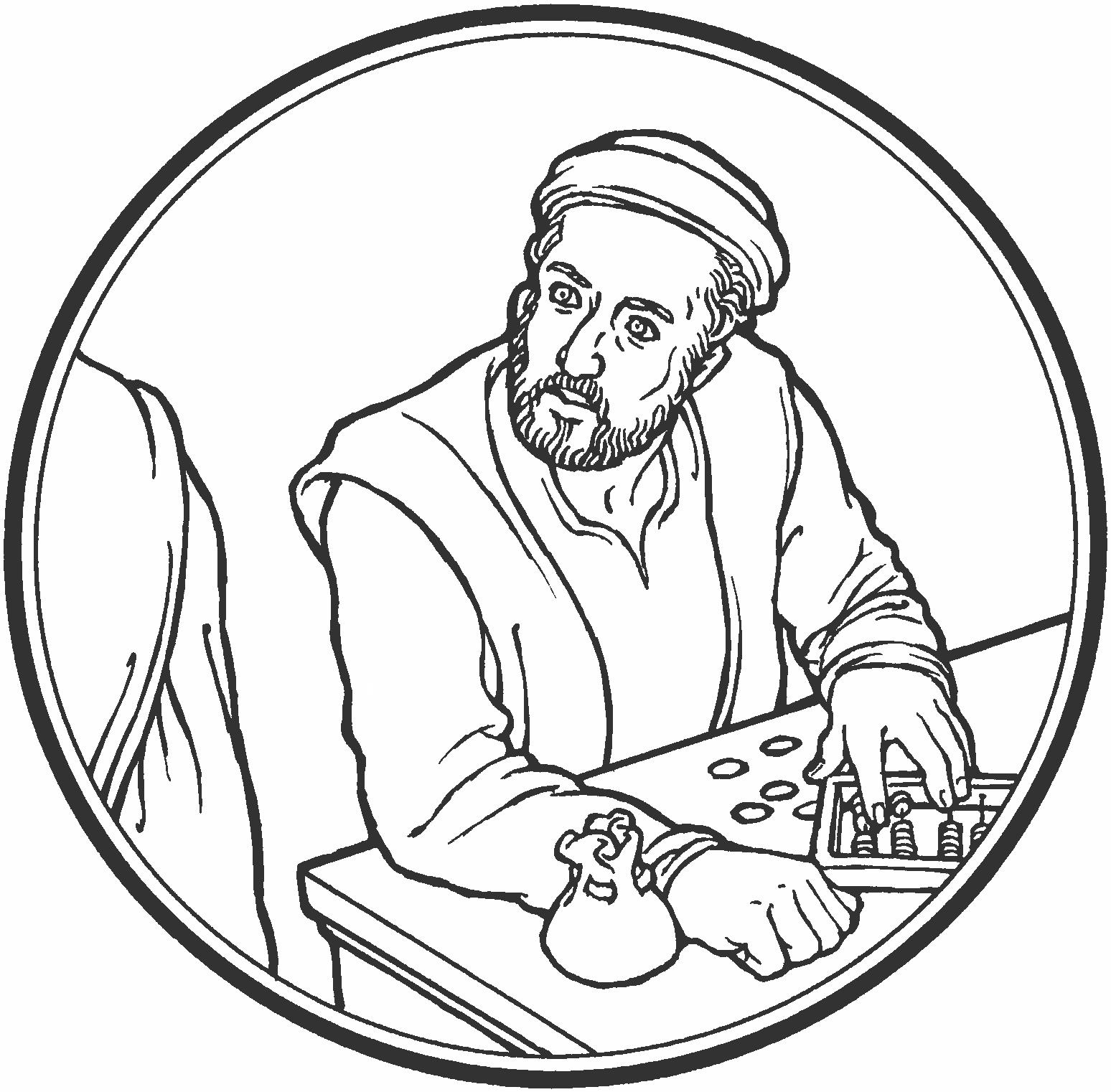
Readings: Hosea 5:15-6:6 | Romans 4:13-25 | Matthew 9:9-13
Text: Matthew 9:9-13
Main message: The call of the Apostle/Evangelist Matthew; Matthew throws a feast and invites tax collectors and sinners. This offends Pharisees, to which Jesus points out that these are the very ones in need of a “physician” because they recognize the illness of sin and seek to be cured by the only One who can.
Location: Nazareth (9:1)
Immediate Context: Jesus has just healed the paralytic and answered the charge against Him forgiving sins on earth.
There were many things which offended the Pharisees about Jesus. Later, in the book of Acts, it would come out that the offense was caused by the preaching that Jesus was the Messiah and rose from the dead (Acts 4:1-12). But at this point, He offended by His proclamation just before today’s Gospel reading: “Take heart, my son; your sins are forgiven.” Responding to this, they accused Him of blasphemy. That is, they wholeheartedly believed that Jesus was a mere man who “[spoke] profanely of sacred things.”[1] They thought His words were the words of a lying prophet, who said things on behalf of God that were not true.
In spite of the dismay of the Pharisees, the crowd who gathered there at Nazareth recognized the effect of what took place:
“6[to the paralytic] ’Rise, pick up your bed and go home.’ 7And he rose and went home. 8When the crowds saw it, they were afraid, and they glorified God, who had given such authority to men.”
And what is this authority given to men? What is this mighty thing which the Lord will do through human hands and with human lips? So far (in Matthew’s Gospel) He has called Peter and Andrew, James and John to be those who are “fishers of men” (Matthew 4:18-22). But Matthew’s call is a bit different:
   9As Jesus passed on from there, he saw a man called Matthew sitting at the tax booth, and he said to him, “Follow me.” And he rose and followed him.
   10And as Jesus reclined at table in the house, behold, many tax collectors and sinners came and were reclining with Jesus and his disciples. 11And when the Pharisees saw this, they said to his disciples, “Why does your teacher eat with tax collectors and sinners?” 12But when he heard it, he said, “Those who are well have no need of a physician, but those who are sick. 13Go and learn what this means: ‘I desire mercy, and not sacrifice.’ For I came not to call the righteous, but sinners.”
Like Peter, Andrew, James, and John, Jesus says, “follow Me.” Unlike their call, with Matthew, we have an account of what came next. Matthew’s response to this was to throw a great feast in his house and invite many who were outcasts according to the Pharisee’s reckoning. They were those who had made an absolute disaster of their lives by their own choices. God had clearly passed them by as unworthy of the high calling of belonging to Him—obviously!
Yet, when Jesus preaches the Kingdom of God, it brings out a crucial rub in their evaluation of who has God’s favor and who does not. I mean, they were certain that God’s favor rested on them. After all, they had done so much for the Lord. Obviously, they were His favorite. But for Jesus to sit at table with these failures—tax collectors and sinners—meant that He must not know what’s really going on in their heart.
In their thinking, if Jesus welcomes the failures, it’s because He has compromised His role as prophet. As the nay-sayers will say on a different occasion:
“If this man were a prophet, he would have known who and what sort of woman this is who is touching him, for she is a sinner.” (Luke 7:39)
Yet, this is exactly what the Lord sought, however: For His mercy to go forth through the ministry of sinners. So, back to the fact that Jesus walked up and chose Matthew and said “Follow Me.” Matthew’s whole profession represented a pagan government. He was a Jew, but of the least-respected kind because he served the uncircumcised.
Yet, the call of Jesus was extended to this man—not because of his social/political status, but because he was a recipient of the grace of God. He was a sinner who had been forgiven, and particularly the Lord was going to use Matthew to be a messenger of His healing for sinners.
This is still the pattern at work in the Kingdom seen in the Church. The Lord often calls people unexpectedly into faith in Him. Through a myriad of paths (and each of us have a story), He leads those who are sick to His healing hands. What no philosophy, no holiness movement, no self-help program can offer—Jesus gives with the words, “Take heart, your sins are forgiven you.”
Some of those He calls, He also equips to proclaim His truth, like Matthew, John and James, Peter and Andrew. St. Paul also was one of these, although for a long time he thought he was pleasing God as a Pharisee. The Lord changed his heart and life radically, and later he spoke of God’s wisdom in this in 2 Corinthians 4:
“But we have this treasure in jars of clay, to show that the surpassing power belongs to God and not to us.” (v. 7)
Yet, we should also consider the whole crowd that was at Matthew’s house. The result of Jesus’ calling of Matthew was that he shared about what the Lord had done for him, and did so by sharing it with others he had known. A whole gaggle of other tax collectors and sinners, gathered at table and learning about the Kingdom of Heaven and how it comes to the sick, rather than those who think themselves well. It comes not to the one who strives toward God, but the broken and contrite spirit who receives mercy in Christ.
This also shows that when God calls us to faith, it will change us from the inside out. It causes us to see people differently. Instead of seeing a set of rules that other people are breaking, being recipients of Christ’s mercy and His sacrifice, it opens our eyes to see others as those for whom Jesus shed His blood. That is what unites the sinners here at Bethlehem. We’re not just a group of failures who were looking for good company. We are a congregation of people who acknowledge our sins and do not try to conceal them because we look to the cross from which our common healing comes.
And now, let us prepare to come to our Lord’s own table, where He will feed us with the medicine we continually need along the way. In the Name + of Jesus. Amen.
[1] https://www.perseus.tufts.edu/hopper/morph.jsp?la=greek&l=BLASFHME%2FW#lexicon
Leave a Reply